Activated Carbon in Bentonite Cat Litter
If you sell or source bentonite cat litter, you already know the uncomfortable truth: odor complaints rarely come from “one thing.” They come from a mix of urine chemistry, litter structure, and how the product behaves day after day.
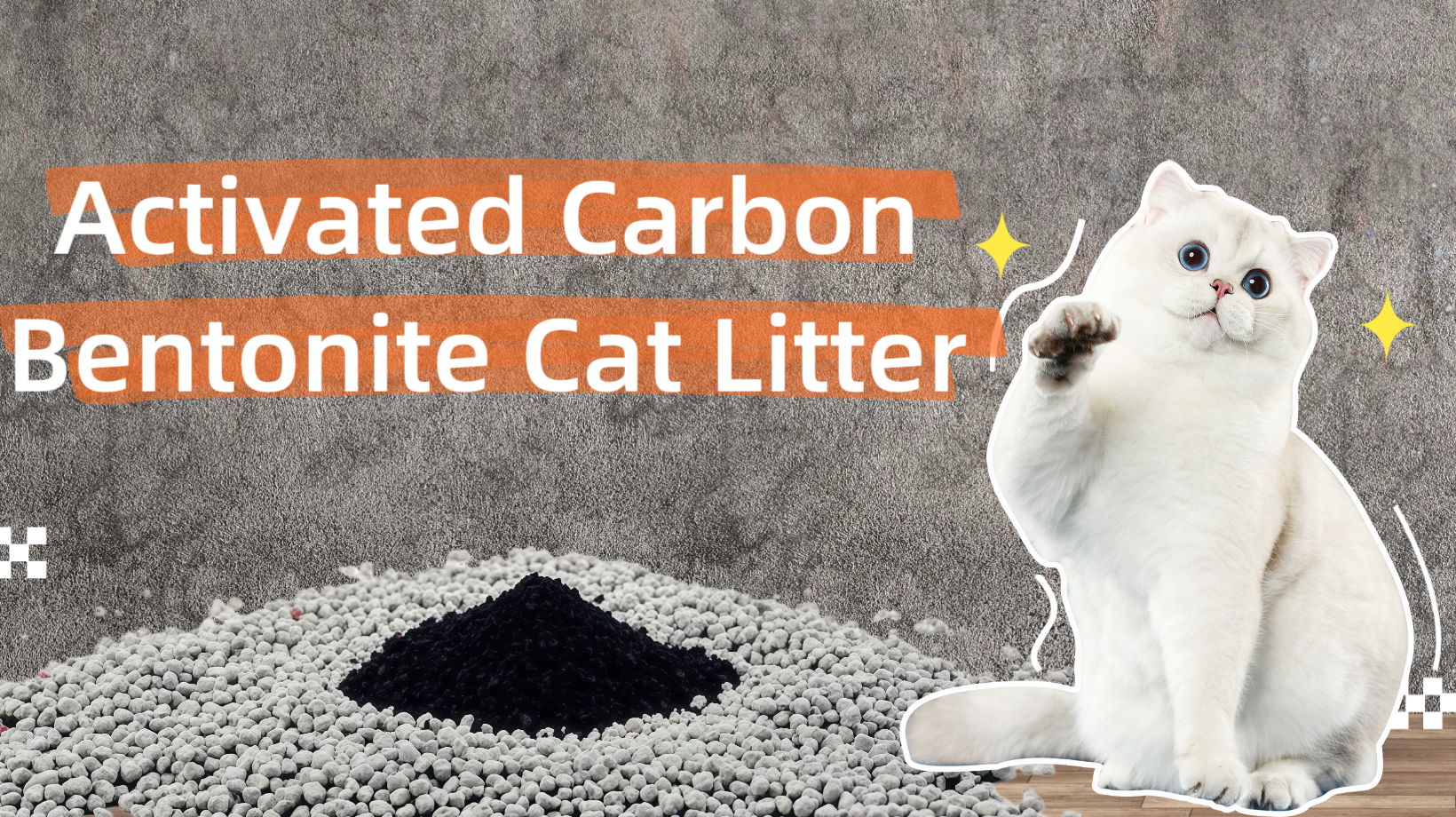
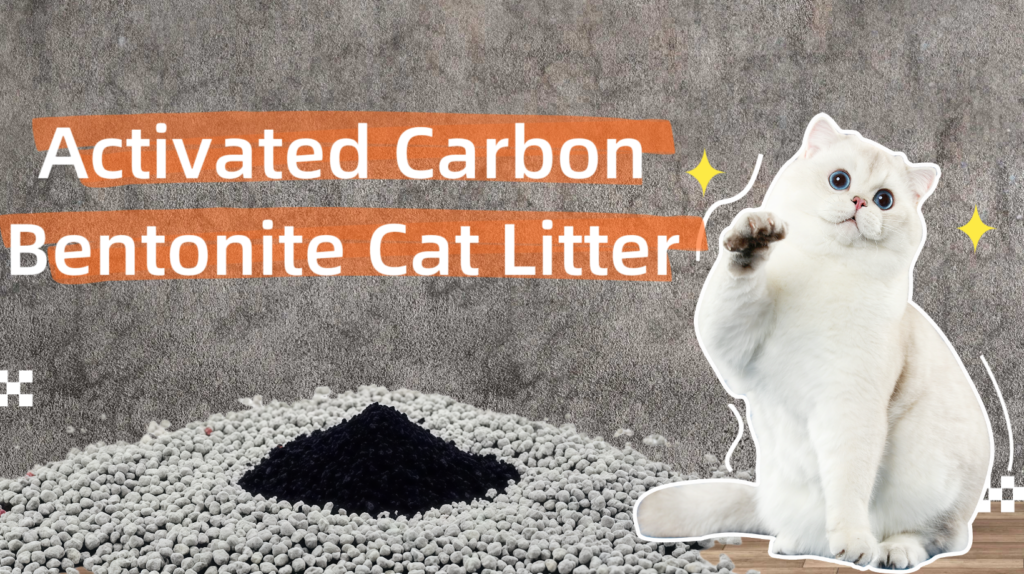
That’s why activated carbon (also called charcoal cat litter in retail language) has become a popular upgrade. It can trap odor molecules instead of just covering them with fragrance.
But here’s the part many buyers miss: adding carbon is not automatically “better.” Push the dose too high, or add the wrong carbon form, and you may trade odor control for weaker clumps or higher dust.
This guide explains how activated carbon in bentonite cat litter works, what research suggests about dosage, and how to position carbon SKUs for different markets—LATAM, EU, North America, and beyond.
What Activated Carbon Actually Does in Cat Litter
Activated carbon is essentially carbon processed to create a huge network of tiny pores. Those pores increase surface area and let carbon adsorb (bind to the surface) odor-causing compounds. The study you provided describes activated carbon as a strong adsorbent with many micropores, which boosts adsorption capacity.
In litter, that matters because odor is not just “smell.” It’s chemistry:
- Ammonia odor rises as urine breaks down.
- Hydrogen sulfide odor is associated with fecal odor and anaerobic decomposition.
Adding activated carbon sharply improved removal of both ammonia and hydrogen sulfide compared with the no-carbon bentonite cat litter, and higher carbon litter reached “over 90%” removal in some real testing studies.
So the promise is real: odor control cat litter can be engineered, not just perfumed
What the Research Suggests About Carbon Dosage in some real experiment (and Why “More” Isn’t Always Better)
In order to find the more suitable dosage, we design with four groups: 0% / 10% / 20% / 30% activated carbon added into a bentonite-based formula.
As carbon addition increased:
- Deodorization improved strongly (ammonia + hydrogen sulfide removal increased).
- Antibacterial performance improved significantly, with higher-carbon groups reaching very high inhibition rates (E. coli >90% and Staph >70% were noted).
- Absorbency increased. The paper links this to carbon’s porous structure and adsorption behavior.
- Clumping strength could decline as carbon increases, because the “clay bonding” portion is diluted and granules may lose cohesion
- Dust can rise, especially at high carbon, because fine carbon powder is light and can generate dust in production and use
Why the study picked ~20% as the “best overall”
The authors concluded that considering the full set of metrics together, the “appropriate” carbon addition level was 20%, balancing absorbency, clumping, dust, deodorization, and antibacterial performance.
That conclusion is valuable for product managers because it reflects reality: a premium SKU is never built on one KPI.
Carbon Dosage vs Performance Balance
Below is a trend-based scoring table designed for sourcing and product planning.
| Carbon inclusion level | Odor control | Clumping stability | Dust risk | Absorbency feel | Typical positioning |
|---|---|---|---|---|---|
| 0% (no carbon) | Low–Mid | High | Low–Mid | Mid | entry / value clay |
| ~10% | Mid–High | High | Mid | Mid–High | “improved odor” SKUs |
| ~20% | High | Mid–High | Mid | High | premium balance / mass premium |
| ~30% | Very high | Mid | Higher | High | odor-first niche SKUs |
- ~20% activated carbon is often where “overall satisfaction” peaks, because you still have reliable clumps while odor control is strong.
- Going higher can make sense, but only if you control dust and protect clump integrity.
Dust: Why Carbon Can Backfire
Buyers like carbon because it “sounds premium.” Consumers like it because it can reduce odor fast.
If you want low dust cat litter while still using carbon, the practical levers are:
- Use carbon with controlled particle form (not ultra-fine).
- Bind carbon into the granule during processing, instead of leaving it as loose fines.
- Run strong dedusting / screening steps after granulation.
This is where the difference between “charcoal-looking” litter and truly low dust clumping cat litter shows up.
Clumping: What Carbon Changes
A common misunderstanding: “More absorbency = better clumping.” Not always.
Carbon can raise adsorption and absorbency feel, but clumping depends on clay bonding and granule structure. The paper explains that higher carbon ratios can reduce cohesion and lower clump strength because the clay portion is reduced.
So for OEM cat litter projects, the goal is not max carbon. The goal is the best ratio where:
- clumps form fast,
- clumps hold when scooped,
- and fines do not explode into dust over time.
That’s why many “premium odor” SKUs land in the mid-range carbon band.
Antibacterial Claims: What You Can Say
Some brands use the phrase “antibacterial cat litter” very loosely. The lab antibacterial test against two common bacteria (E. coli and Staphylococcus aureus) after the litter was in contact for a set time (48 hours in the paper). The results showed a clear trend: as the activated carbon ratio increased, the measured bacterial inhibition improved. Also notes that performance gains start to level off at higher dosages, so “more” is not always “better.”
| Blend | Ammonia before (mg/m³) | Ammonia after (mg/m³) | Ammonia removal (%) | H₂S before (µg/m³) | H₂S after (µg/m³) | H₂S removal (%) |
|---|---|---|---|---|---|---|
| Control-0% | 1.60 | 0.97 ± 0.03 | 41.19 ± 1.82 | 158.20 | 107.50 ± 4.48 | 33.65 ± 2.97 |
| AC-10% | 1.60 | 0.27 ± 0.03 | 87.38 ± 2.35 | 158.20 | 38.51 ± 3.17 | 79.43 ± 2.11 |
| AC-20% | 1.60 | 0.12 ± 0.03 | 97.45 ± 2.15 | 158.20 | 15.60 ± 3.22 | 94.65 ± 2.14 |
| AC-30% | 1.60 | 0.08 ± 0.03 | 99.30 ± 2.16 | 158.20 | 13.25 ± 3.34 | 96.20 ± 2.22 |
Odor control results: what changes the most
If you only care about odor control cat litter, this is the headline:
Adding activated carbon sharply improves removal of ammonia and H₂S. The big jump happens early. After that, gains become smaller.
| Blend | Ammonia before (mg/m³) | Ammonia after (mg/m³) | Ammonia removal (%) | H₂S before (µg/m³) | H₂S after (µg/m³) | H₂S removal (%) |
|---|---|---|---|---|---|---|
| Control | 1.60 | 0.97 ± 0.03 | 41.19 ± 1.82 | 158.20 | 107.50 ± 4.48 | 33.65 ± 2.97 |
| AC-10 | 1.60 | 0.27 ± 0.03 | 87.38 ± 2.35 | 158.20 | 38.51 ± 3.17 | 79.43 ± 2.11 |
| AC-20 | 1.60 | 0.12 ± 0.03 | 97.45 ± 2.15 | 158.20 | 15.60 ± 3.22 | 94.65 ± 2.14 |
| AC-30 | 1.60 | 0.08 ± 0.03 | 99.30 ± 2.16 | 158.20 | 13.25 ± 3.34 | 96.20 ± 2.22 |
- Control already removes some odor (clay does adsorb).
- AC-10% is a major step up.
- AC-20% and AC-30 are both very strong.
- AC-30% improves slightly more, but you must check trade-offs (next section)
So… what is the “best” carbon level?
There is no single answer for every market. But from this dataset trend:
- AC-10 already gives a big odor jump with small trade-offs.
- AC-20 looks like a strong balance: very high odor removal, better absorption, and less strength loss than AC-30.
- AC-30 looks “max odor,” but it also shows the biggest hit to strength and the highest dust.
A simple way to choose:
- If your channel is premium retail (reviews matter): you often want high odor + stable clumps + low dust. AC-10 to AC-20 is usually the safer band.
- If your channel is wholesale / big packs: odor claims are still important, but clump integrity after handling matters a lot. Again, AC-20 often makes more sense than pushing to the top.
| Group | Water absorption (%) | Clump weight (g) | Clump strength (N) | Dust rate (%) |
|---|---|---|---|---|
| CK | 232.76 ± 8.94a | 27.20 ± 1.00a | 9.80 ± 0.61 | 2.22 ± 0.17 |
| A | 247.65 ± 9.49ab | 27.77 ± 0.98a | 9.45 ± 1.05 | 2.29 ± 0.17 |
| B | 263.08 ± 10.12bc | 28.53 ± 0.98ab | 8.75 ± 0.61 | 2.38 ± 0.14 |
| C | 268.08 ± 10.41c | 29.68 ± 0.89b | 7.00 ± 1.21 | 2.53 ± 0.11 |
FAQ
Q1: Does carbon always increase dust?
Not always. It depends on carbon PSD, how it is blended, and how well the line dedusts. But high carbon load can raise fines risk if not controlled.
Q2: Does carbon reduce clumping?
It can reduce clump strength at higher levels in some formulas. That is why “odor upgrade” should be balanced with clump integrity tests.
Q3: Is fragrance enough for odor control?
Fragrance helps first impression. But odor control that drives repeat orders usually needs real adsorption and moisture stability.